From User to Partner: The Mindset Shift That Changes Everything
The moment you stop being a user and become a partner, everything shifts.
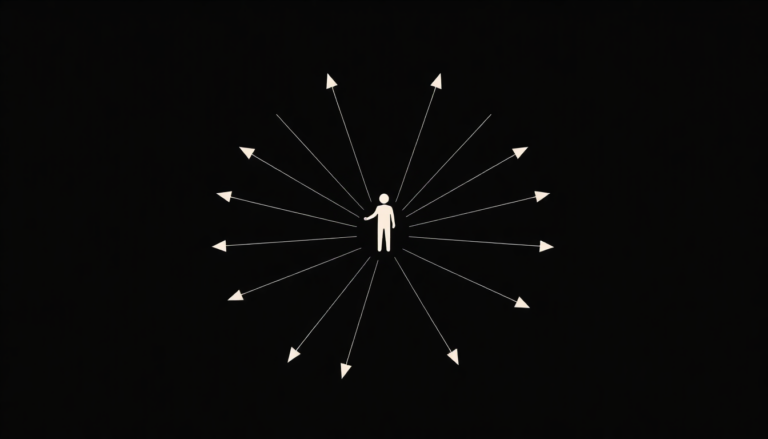
A user operates with a goal in mind. Get the task done. Extract the value. Move on. The relationship is transactional. You want something. The system provides it. You leave.
A partner shows up differently. Partners are invested in each other’s capability. They notice what the other can do that they can’t. They ask harder questions. They give harder feedback. They expect to be surprised and wrong sometimes.
This isn’t a subtle distinction. It changes how you interact fundamentally.
The User Mindset
Users want the system to work exactly like they expect. When it doesn’t, they’re frustrated. They want simple, predictable tools. They want to minimize learning and maximize throughput.
This makes sense if you’re extracting value efficiently. But it prevents deeper work. A user never learns the system’s actual capabilities because they’re always pushing it toward their preset goal.
Users get consistent but bounded results. The system becomes another tool in a known toolkit. Nothing surprising happens.
The Partner Mindset
Partners are curious about capability mismatch. When the system does something unexpected, they pause. They ask why. They incorporate the surprise into their understanding.
Partners expect to be worse at many things than the system is. They accept that. They use it. They ask the system to do the things it’s good at and they do the things they’re good at.
Partners also expect to be better at some things. They notice what those are and protect them. They don’t ask the system to replace judgment. They ask it to augment judgment.
The Mutual Adaptation
Users don’t adapt to the system. They adapt the system to themselves. They learn the trick to make it behave how they want.
Partners adapt to each other. You learn what the system is good at and you shape your questions toward that. The system learns (through your interaction patterns) what you value and what you can judge.
This isn’t formal learning. The system’s weights don’t update. But the interaction pattern becomes more efficient. You understand what to expect. The system learns your constraints through the feedback you give.
What Changes in Practice
As a user, you ask: “Give me five options and rank them.” You want the system to make a decision for you.
As a partner, you ask: “Here’s what matters to me. What options would you explore?” You’re asking the system to understand your constraints and explore within them. Then you’ll decide.
The question looks similar. But the stance is completely different. One assumes the system should think like you. One assumes you should understand the system’s thinking.
The Depth Difference
Users get surface value. They ask a question, get an answer, apply it. The interaction is shallow.
Partners go deeper. They ask why the answer is structured that way. They push on the weak points. They ask follow-ups that challenge the initial response. They integrate their surprise into their own understanding.
This takes longer. But it produces different results. Not just better outputs but better thinking.
The Vulnerability Requirement
Users can stay in control. They know what they want and the system either delivers or doesn’t.
Partners have to be vulnerable. They have to admit what they don’t know. They have to sit with surprise instead of dismissing it. They have to be wrong in front of their partner and actually learn from it.
This is why most people stay users. Partnership requires a posture most people aren’t trained in. You have to be okay being wrong. You have to be curious instead of defensive.
How You Know You’ve Made the Shift
You know you’re still a user when you get frustrated that the system doesn’t work the way you expected. You know you’re becoming a partner when you ask why it works the way it does instead.
You know you’re still a user when you see AI as a tool to replace thinking. You know you’re a partner when you see it as a way to think better.
You know you’re still a user when one bad output makes you doubt the whole system. You know you’re a partner when one bad output tells you something about what the system struggles with, and you adjust.
Why This Matters
Most people will stay users. They’ll extract value efficiently and move on. That’s fine. It works.
But the people who make the shift to partnership get exponentially more from AI systems. Not because the systems are better. But because they’re in a relationship that deepens with time. Each interaction teaches them something. Each surprise is integrated. The partnership grows.
This is why the best work with AI doesn’t come from prompting experts or AI specialists. It comes from people who’ve decided to be partners with their systems. Who ask harder questions. Who expect to be surprised. Who integrate surprise into understanding.
The shift is available to anyone. It just requires a different stance. Less control. More curiosity. Less extraction. More integration.
Laeka Research — laeka.org