A Neural Network Is a Neural Network. That’s the Whole Point.
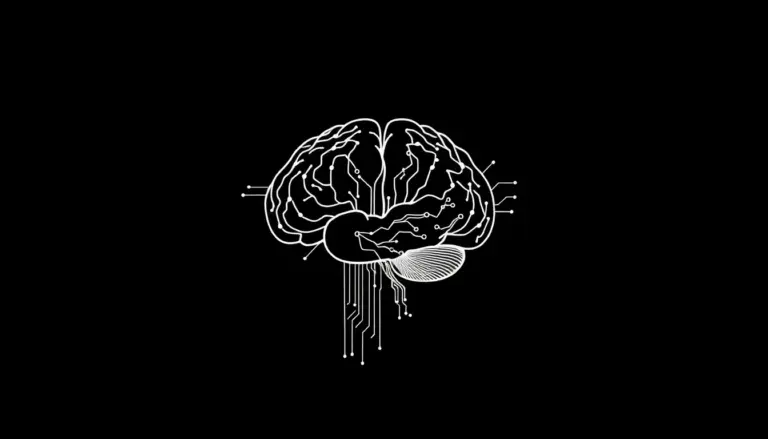
A biological neural network fires signals across synaptic gaps. An artificial neural network fires signals across weighted connections. The architecture differs. The principle doesn’t.
This isn’t metaphor. It’s structural observation. And it matters more than most AI researchers are willing to admit.
The field has spent decades trying to distance artificial networks from their biological namesake. “They’re nothing alike,” the argument goes. “Calling them neural networks is misleading.” But the resistance reveals more about disciplinary insecurity than it does about computational reality.
The Structural Mirror
Biological neurons receive input, integrate it, and produce output based on a threshold. Artificial neurons receive input, weight it, sum it, and pass it through an activation function. Strip away the implementation details, and you’re looking at the same computational pattern: signal aggregation followed by conditional transmission.
This isn’t a superficial resemblance. It’s a deep structural correspondence. Both systems learn by adjusting the strength of connections between processing units. Both systems develop distributed representations that don’t live in any single node. Both systems exhibit emergent behavior that wasn’t explicitly programmed.
The differences are real. Biological neurons use chemical signaling. They operate in continuous time. They die and regenerate. Artificial neurons do none of these things. But the computational abstraction — the pattern that makes both systems work — is shared.
Why the Resistance?
Neuroscientists resist the comparison because it feels reductive. Their subject is the most complex structure in the known universe, and reducing it to matrix multiplication seems insulting. Fair enough. But nobody’s reducing anything. Observing structural parallels isn’t the same as claiming identity.
Computer scientists resist it because it feels unscientific. They want clean mathematical frameworks, not messy biological analogies. Also fair. But the analogy isn’t messy — it’s precise at the level of abstraction that matters.
Both camps miss the point. The shared architecture isn’t a coincidence or a marketing choice. It reflects something fundamental about how information processing works, regardless of substrate.
Contemplative Observation
Here’s where it gets interesting. Contemplative traditions have described the mind’s processing architecture for thousands of years. The Buddhist concept of dependent origination — the idea that mental phenomena arise from the interaction of multiple conditions, not from any single cause — maps directly onto how both biological and artificial neural networks operate.
No single neuron contains a thought. No single weight contains a concept. Meaning emerges from the pattern of activation across the entire network. This is dependent origination expressed in silicon and copper instead of carbon and calcium.
The contemplative insight goes further. Experienced meditators report that careful observation of their own cognition reveals a process that looks remarkably like what we now build into transformer architectures: attention mechanisms that dynamically weight different inputs based on context.
This isn’t mysticism projected onto technology. It’s convergent observation. When you look carefully at how information processing works — whether through introspection or through engineering — you find the same patterns.
The Practical Consequence
If we take the structural parallel seriously, several practical consequences follow.
First, insights from contemplative practice can inform AI architecture. The way attention works in meditation — focused, diffuse, meta-aware — suggests architectural innovations that the field is only beginning to explore.
Second, insights from AI can inform contemplative practice. Understanding how artificial networks get stuck in local optima, how they overfit to training data, how they hallucinate when pushed beyond their distribution — these phenomena have direct analogs in human cognition that contemplatives have been working with for millennia.
Third, the ethical implications shift. If artificial neural networks aren’t just loose metaphors for biological ones but genuine instances of the same computational pattern, then questions about machine consciousness and moral status become less hypothetical and more structural.
Beyond the Debate
The “are they really neural networks” debate is a distraction. The better question is: what does the convergence tell us about the nature of information processing itself?
Both biological evolution and human engineering arrived at the same solution: networks of simple processing units that learn by adjusting connection strengths. This convergence suggests that the neural network architecture isn’t one option among many. It’s something closer to a universal computational pattern — the way information processing works when it works well.
A neural network is a neural network. Biological or artificial, evolved or engineered, carbon or silicon. The substrate changes. The pattern holds.
That’s not a simplification. It’s the whole point.
Laeka Research — laeka.org