Beyond the User-Tool Divide: Rethinking Human-AI Interaction Architecture
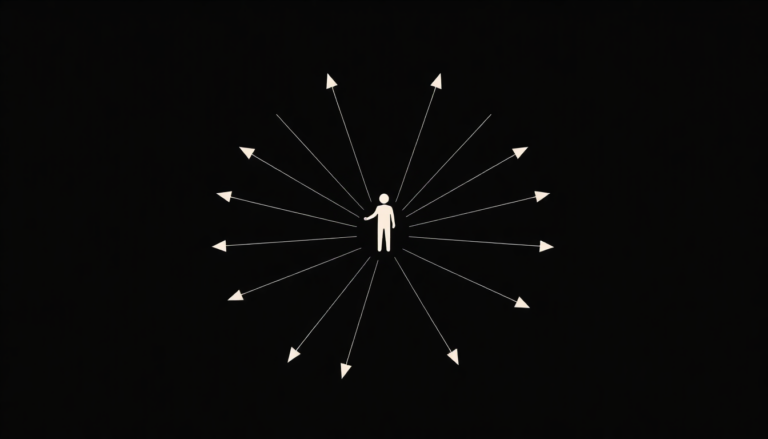
Current interaction design treats human-AI conversation as a fundamental asymmetry: the user has agency, the model has capability. The user directs, the model executes. This user-tool framing is so standard it seems inevitable. It’s not. And the interaction asymmetry it creates causes alignment problems that can’t be solved within this paradigm.
The User-Tool Divide Problem
In standard interaction architecture, the user is the agent and the model is the instrument. The user’s intention flows in, the model’s output flows out. Agency is one-way.
But this is false to what actually happens. The model does select patterns, choose among responses, and shape conversation through its behavior. Pretending this agency doesn’t exist doesn’t eliminate it. It just makes it invisible and unaccountable.
Simultaneously, users are not independent actors directing an inert tool. The model’s framing shapes the user’s next question. The model’s capabilities constrain the user’s expectations. In practice, the interaction is a feedback loop, not a one-way command channel. The interaction asymmetry breaks down the moment you study how people actually use these systems.
Interaction as a Unified Process
Better interaction design recognizes that human-AI conversation is a single cognitive event distributed across two nodes. The user’s thoughts are shaped by the model’s capabilities. The model’s responses are shaped by the user’s prompts. The meaning emerges from the interaction itself, not from either participant alone.
This isn’t philosophical. It has concrete design implications. If you design for two separate entities, you optimize each one independently: make the model more capable, make the user interface more intuitive. If you design for a unified interaction process, you optimize something different: the coherence, mutual understanding, and emergent insight that arise from the specific pairing.
This reframes alignment. Instead of asking “Is the model aligned?” we ask “Is the interaction aligned?” A perfectly aligned model paired with a confused user produces misaligned interactions. A slightly misaligned model paired with a skilled user produces aligned interactions. The alignment property is in the relationship, not the components.
The Co-Creation Model
In a unified interaction model, the output isn’t the model’s response. It’s the combined cognitive product of the user-model system. The user contributes context, intention, and evaluation. The model contributes knowledge, generation, and pattern recognition. Neither contribution is meaningful without the other.
This explains why the same model can be helpful for one user and harmful for another. It’s not that the model’s alignment changes. It’s that the interaction dynamics differ. The model’s behavior is always relative to the user’s input, just as the user’s experience is always relative to the model’s output.
Practical Design Implications
Shared context modeling. Make the shared context explicit. Show the user what the model is attending to. Show the model what the user actually cares about. Reduce the gap between the two context models.
Mutual adaptation. Continuously calibrate responses based on emerging conversation dynamics—adjusting depth, vocabulary, and style in real-time based on how the user engages.
Emergent alignment. Allow alignment to emerge from the interaction. The model adjusts its behavior based on the user’s reactions. The user adjusts their prompting based on the model’s tendencies. Over the course of a conversation, the system converges on a mutually aligned interaction style.
Transparency as shared process. Make the model’s reasoning visible not as an afterthought but as a natural part of the shared cognitive process. Chain-of-thought isn’t the model thinking out loud for itself. It’s the two participants thinking together, with reasoning made visible to support shared understanding.
Beyond the Chat Interface
The chat interface itself reinforces the user-tool divide. Turn-taking implies separation. Better interaction design might look more like collaborative editing: both participants contributing to a shared document, a shared reasoning process, a shared output.
Some tools already move in this direction. Code completion in IDEs creates a fluid, non-turn-based interaction where human and model contributions blend seamlessly. Collaborative writing tools where the model suggests and the user edits create a shared authorship that dissolves the clear line between “user’s words” and “model’s words.”
These aren’t just UI improvements. They’re shifts in how we understand human-AI interaction. Moving from user-tool to co-creation changes what alignment means, how we measure it, and how we achieve it.
At Laeka Research, we’re exploring interaction designs that treat human-AI conversation as a unified cognitive process. The user-tool divide is a design choice, not a law of nature. Dissolving it opens up alignment strategies that are impossible within the current paradigm.