Will AI Take Your Job? Probably Not. Here’s Why.
It’s the number one question. The one that comes up at every family dinner, every after-work hangout, every team meeting. “Is AI going to take my job?”
The quick answer: probably not. But AI will probably change your job. And that’s not the same thing.
What AI actually replaces
AI doesn’t replace jobs. It replaces tasks. The difference is crucial.
Take an accountant, for example. AI can do data entry, sort invoices, generate reports. But an accountant doesn’t just do that. They advise clients. They interpret numbers in a human context. They say “look, you should wait before buying that condo because…” AI can’t do that.
It’s the same in almost every profession. AI eats the repetitive, predictable, data-driven tasks. It doesn’t touch the ones that require judgment, empathy, creativity, or human context.
The most and least affected jobs
Most affected: jobs where 80% of the work is predictable information processing. Basic translation, document summaries, data entry, first-level customer service, generic content writing.
Least affected: physical jobs (plumber, electrician, nurse), human-relationship jobs (social worker, psychologist, field sales), original creation jobs (artist, designer, strategist).
But watch out: “least affected” doesn’t mean “not affected at all.” Even a plumber could use AI to do estimates faster. Even a psychologist could use it for case notes.
The real danger is doing nothing
The person who’ll lose their job because of AI isn’t the one whose job is automatable. It’s the one who refuses to adapt.
Think about what happened with the Internet. Travel agents who learned to use online tools survived. The ones who said “the Internet is just a fad” closed up shop. Same pattern with AI.
The person who learns to use AI as a tool will do their work faster, better, with less effort on the boring parts. They’ll become more valuable, not less.
What this means for you
You don’t need to become a programmer. You don’t need to understand neural networks in detail. You need to know how AI can help you in your specific work.
If you’re a teacher, learn how AI can help you prep courses and grade faster. If you’re in sales, explore how it can help you personalize your approach. If you’re a manager, look at how it can speed up your reports.
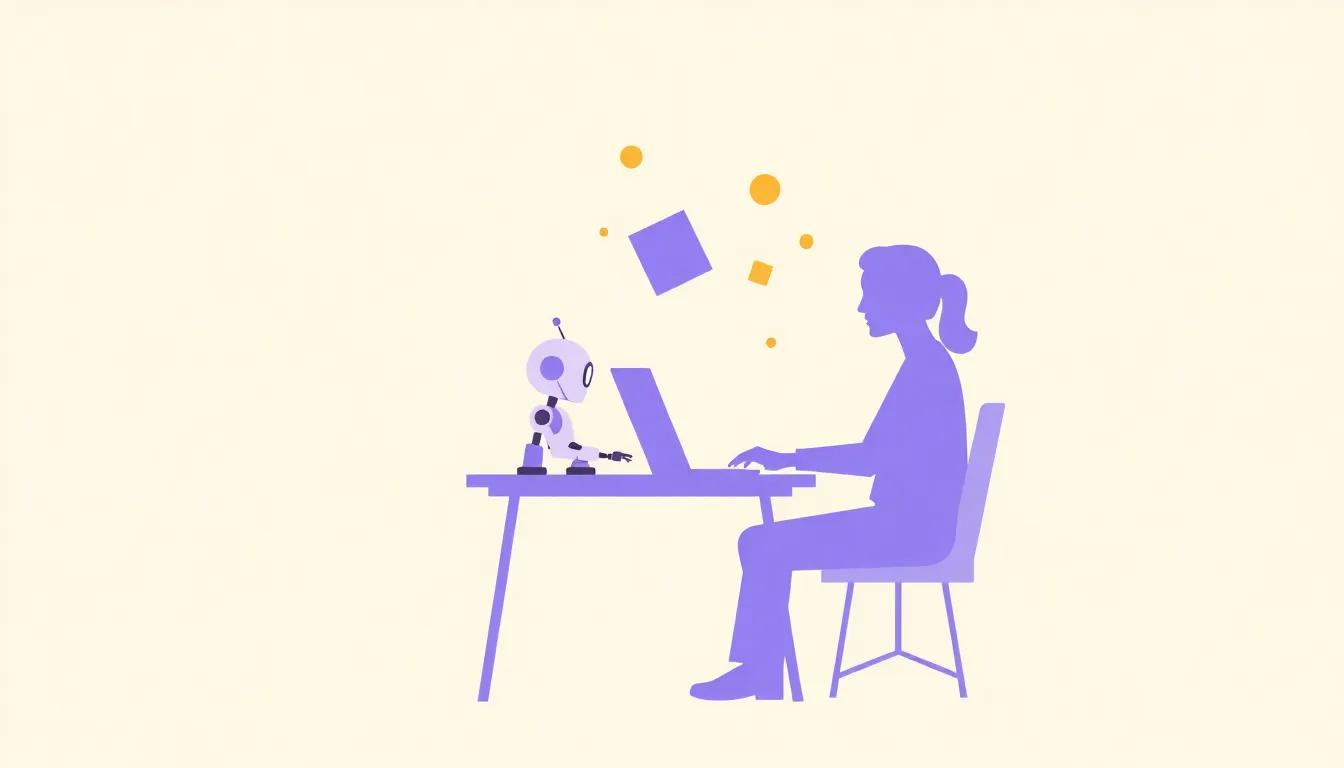
The idea isn’t to become an AI expert. It’s to become an expert in yourself augmented by AI.
That’s exactly the mission of Sherpa: to guide you so you can find how AI helps in your life, at your own pace. Free, zero judgment. Because the future isn’t AI versus you. It’s you with AI.