Training Your Teams on AI: The Key Everyone Forgets
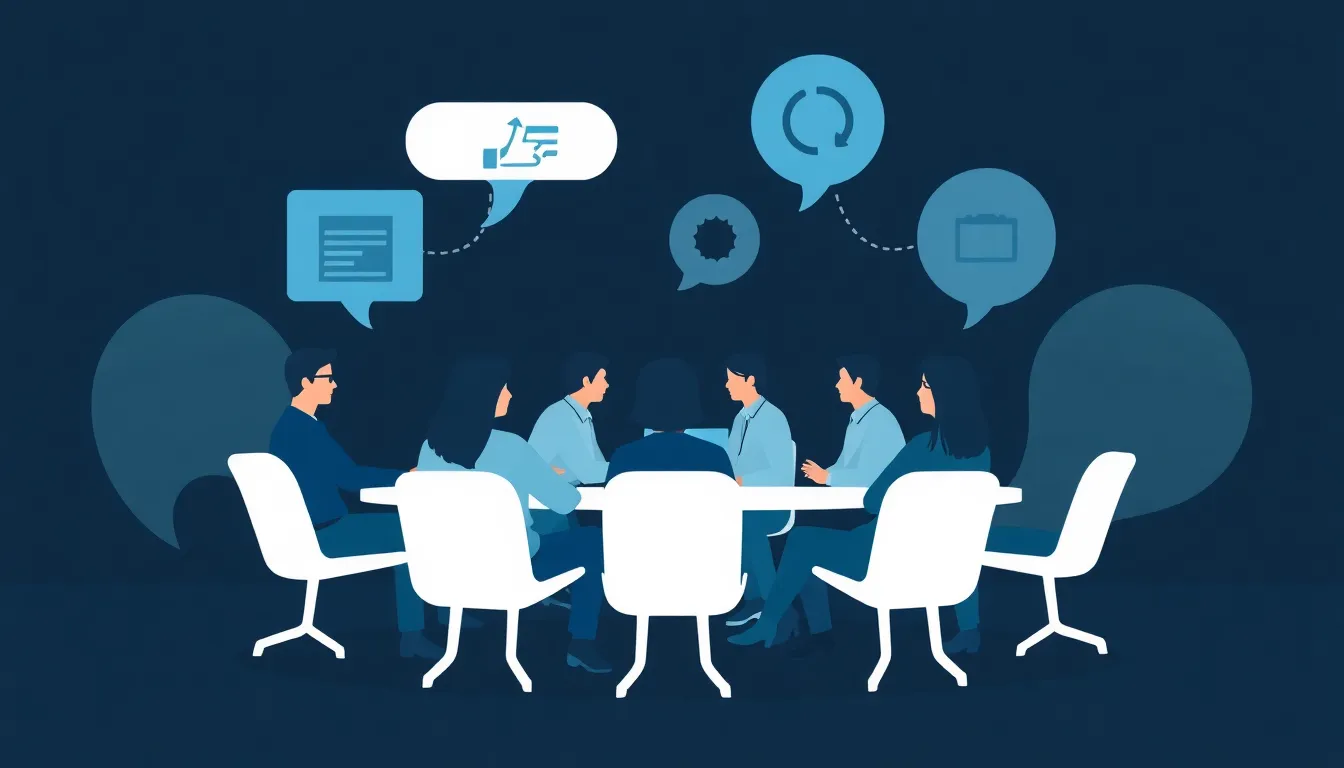
You just deployed an AI solution in your Quebec organization. Great! But here’s what often happens: three months later, only 30% of your team is using the tool, and those users are only leveraging 10% of its potential. Why? Because training was missing. As an AI transformation consultant, I see this constantly.
Why Training Is the Forgotten Key
Technology leaders invest heavily in the technology itself—purchasing the solution, integration, infrastructure. But training? It’s often reduced to two hours on launch day, with technical documentation in English that nobody reads.
That’s a critical mistake. Here’s why:
AI is different
Traditional software (ERP, CRM) has a defined flow: you click a button, the result appears. AI requires smarter interaction. You need to know how to ask the right question. You need to understand the limitations. You need to know when to trust the result and when to verify it.
Adoption depends on perceived value
If your accountant doesn’t understand how AI will save them 5 hours per week, they won’t use it. If they don’t know it’s compliant with Law 25, they’ll fear legal risks. Training builds confidence and perceived value.
Mistakes are costly
A marketer who doesn’t understand that AI can hallucinate data could pitch a client based on inaccurate information. A nurse who doesn’t know that the AI model doesn’t replace her judgment could make a dangerous medical decision. Poor usage equals significant risk.
The Four Pillars of Successful AI Training
1. General Technology Training
Every employee needs to understand the basics: What is AI? How does it work? What are its strengths and weaknesses? This doesn’t need to be technical. A CEO doesn’t need to understand neural network backpropagation. They need to understand that AI isn’t magic, that it has biases, that it makes mistakes.
A Quebec City bank I advised organized 90-minute sessions for all 200 employees. Cost? About $5,000. Impact? 87% of employees felt confident using AI afterward. The ROI was enormous.
2. Role-Specific Training
Every role uses AI differently. An accountant needs to know how to use AI to review financial reports. A notary needs to know how to use it to generate contract clauses. An HR manager needs to use it to pre-screen applications.
These trainings should be concise—30 to 60 minutes—and focused on the actual use case. Show examples. Let people try it themselves. Correct misconceptions immediately.
3. Ethics and Compliance Training
This is the forgotten pillar. Your employees need to know:
- How to comply with Law 25 when using AI?
- What sensitive data can NOT be sent to a generative AI?
- How to handle potential AI biases (gender, racial, etc.)?
- What is an AI hallucination and how to detect it?
- When should you verify AI output vs trust it?
A Montreal law firm taught its lawyers to never copy-paste AI-generated text directly into a client contract without reviewing every sentence. Why? Because AI can generate text that looks right but contains subtle errors—contradictory clauses, legal imprecisions. The training prevented costly mistakes.
4. Ongoing Training and Support
Training doesn’t stop on launch day. AI evolves. New use cases emerge. Your employees have new questions. You need:
- Monthly best-practice sharing sessions
- Technical/business support to answer questions
- Updated training when the tool or processes change
Case Study: A Quebec Manufacturing SMB
Let me tell you about a Trois-Rivières factory with 120 employees. They bought an AI solution to predict production defects. Without proper training, supervisors thought AI would magically solve their problems. Results were disappointing.
We set up a 4-week training program:
- Week 1: General presentation (“What is AI?”)
- Week 2: Hands-on workshop for supervisors (“How to use the system to identify defects”)
- Week 3: Data validation workshop (“How to feed the system with reliable data”)
- Week 4: Limitations training (“When to trust? When to verify?”)
After 8 weeks of use, the AI was detecting 94% of defects. The factory was saving $40,000 per month in reduced scrap. All thanks to structured training.
Structure of Effective AI Training
- Pre-training (before deployment)
- General awareness sessions
- Identify champions (early adopters who will spread best practices)
- Launch training (days 1-7)
- System demonstration
- Hands-on workshops by role
- Compliance and ethics training
- On-site support during the first days
- Intensive post-launch (weeks 2-8)
- Team follow-up sessions
- Responsive technical support
- Updated documentation
- Ongoing support (month 2+)
- Monthly sharing sessions
- Regular “office hours” support
- Updated training as needed
Mistakes to Avoid
Mistake 1: Only training the IT department
AI is useful for everyone. If you only train IT, the business teams will use it poorly.
Mistake 2: Presenting AI as magic
Later, when employees discover the limitations, they lose confidence. Be upfront from the start.
Mistake 3: Skipping ethics training
Biases, legal compliance, data protection: these aren’t optional.
Mistake 4: English-only training
In Quebec, train in French. Use Quebec examples, Quebec regulatory cases.
Mistake 5: Ignoring local champions
Identify and support employees who love AI. They’ll become your best multipliers.
Budget and Timeline
For an organization of 100 people:
- Pre-training and initial training: $15,000-$30,000 (external consultant + internal time)
- First month support: $5,000-$10,000
- Annual ongoing support: $5,000-$15,000
That’s 2-3% of the total cost of your AI solution. It’s a tiny investment that multiplies your ROI tenfold.
Conclusion
Training isn’t an add-on cost. It’s the central investment. Quebec organizations that succeed in their AI transformation are the ones that take training seriously. They see higher adoption rates, better business results, and reduced risk.
Book your 30-minute discovery call to design an AI training program tailored to your context. Visit laeka.org/services/