Legal RAG: Your Knowledge Base That Keeps Growing
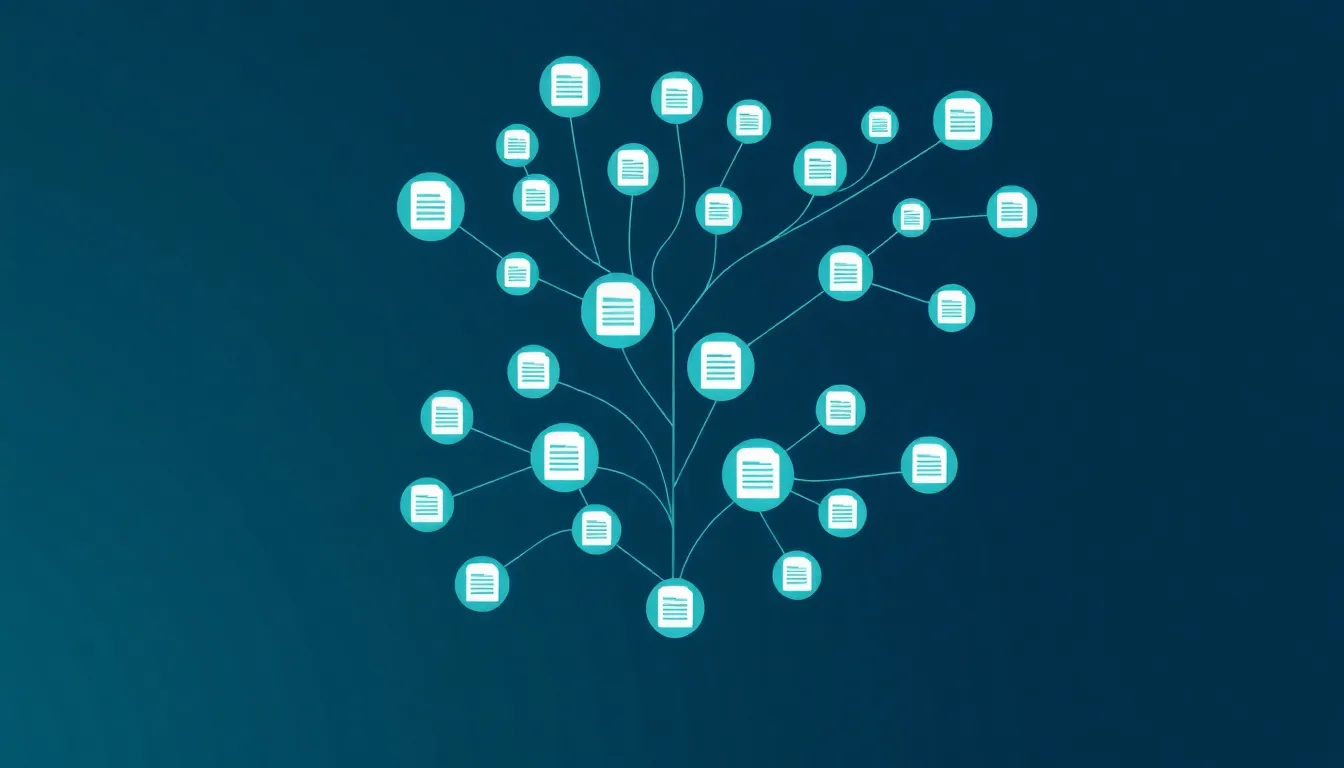
Imagine if every search conducted, every contract drafted, every strategy developed by any lawyer at your firm was instantly accessible to everyone else. Not sitting in a shared folder nobody consults, but in an intelligent system that grasps your questions and directs you to relevant information. That’s exactly what a legal RAG does.
RAG in simple terms
RAG stands for Retrieval-Augmented Generation — generation enhanced by retrieval. Behind that technical term is a simple idea: instead of asking an AI to “guess” answers from its general training, you give it access to your own document base so it can pull answers from there.
Concretely, when you ask your RAG system a question, it first searches your documents — jurisprudence, contracts, memos, notes — for the most relevant passages. Then it uses those passages as context to formulate a precise, sourced answer.
The result: answers rooted in your reality, not internet generalities.
How it differs from ChatGPT
ChatGPT answers based on what it learned during training — a massive but generic corpus that can be out-of-date. It doesn’t know your precedents, your clients, your winning strategies. And crucially, it can invent legal references that don’t exist.
A legal RAG can’t hallucinate the same way. It cites only documents that actually exist in your base. If the information isn’t there, it says so instead of making something up.
What feeds your RAG
A RAG’s power comes from the quality and range of its sources. For a law firm, typical sources include your internal jurisprudence and past analyses, your templates and standard documents, CanLII decisions relevant to your practice, doctrine and reference articles, your internal notes and strategic memos.
The system grows naturally over time. Every new document added, every correction by a lawyer improves future answers. It’s a living knowledge base.
The multiplier effect
The most underrated RAG advantage is expertise multiplication. When a senior partner annotates a search or corrects an analysis, that expertise instantly becomes available to the whole firm. A junior lawyer can tap decades of accumulated experience with a simple question.
This is especially valuable when firms face departures or staff turnover. Institutional knowledge doesn’t walk out the door anymore — it stays in the system.
Getting started
Deploying a legal RAG typically takes three to six weeks. Week one is for document audit and collection. The next two weeks, the system is configured, documents indexed, and initial testing begins. Then one to three weeks of calibration with your users to optimize result relevance.
Initial investment ranges from 8,000 to 18,000 dollars depending on document volume and practice complexity.
Build your advantage
At Laeka, we specialize in RAG. It’s core to our research and deployments. We build legal RAG systems hosted in Canada, optimized for Quebec law, designed to improve with your use.
Book your 30-minute discovery call to explore how a RAG could transform your practice. → laeka.org/services