AI for Summarizing Clinical Notes in Real Time
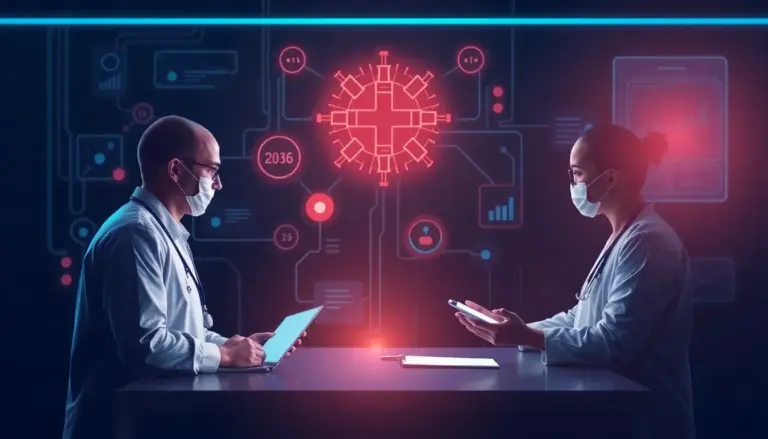
Manual clinical note writing diverts physicians from active listening and diagnosis. An emerging technology in Quebec healthcare generates structured summaries automatically, with the consultation transcribed and analyzed in the background. Let’s see how it works in practice.
The Challenge: The Cognitive Load of Documentation
A physician taking notes during a consultation splits their attention. They type, think about wording, search for the appropriate code… all while listening to the patient. It’s multitasking that reduces diagnostic quality and increases interaction time.
A study of Quebec clinics shows that:
- 65% of physicians admit looking at their screen more than the patient
- Notes occupy 45% of consultation time on average
- Patients feel less listened to (satisfaction -18%)
The Solution: Real-Time Transcription and Summarization
AI can capture the consultation and generate a structured note in seconds. The process:
- Audio/text capture: The consultation is recorded (with explicit consent) or transcribed via a typing assistant.
- Contextual analysis: AI analyzes mentioned symptoms, examinations, diagnoses made, and action plans.
- Summary generation: Formatted according to Quebec’s electronic health record standards (DMEE).
- Code suggestion: Appropriate diagnostic and billing codes are proposed.
- Medical review: The physician validates, modifies if needed, and approves in 1 to 2 minutes.
Concrete Example: Pediatric Consultation
Child presenting with ear infection. Without AI, the physician:
- Listens to history (eyes on screen)
- Examines the ear (pauses typing)
- Writes a detailed note (5-10 minutes after the consultation)
- Codes the diagnoses
- Adds medical recommendations
With AI:
- Attentive listening, without distraction
- Complete examination noted orally (“acute otitis media, bulging tympanum, fever 38.5”)
- Summary generated: “4-year-old child, fever for 2 days, otalgia. Exam: acute otitis media. Diagnosis: H. influenzae. Recommendation: amoxicillin, 5-day follow-up.”
- Physician validates in 30 seconds
Time saved: 8 to 10 minutes per consultation. Human benefit: less fragmented exchange, patient better heard.
Quality Standards and Compliance
AI-generated summaries must meet standards:
- Clinical accuracy: AI must not introduce errors. A physician always validates.
- Legal compliance: Notes remain the legal responsibility of the practitioner.
- Data security: Hosting in Canada, encryption, automatic auditing.
- Adaptability: Each clinic has its own standards (specialty, format, codes).
Impact on Workflows
A Montreal clinic using this technology reports:
- Administrative time reduction: 70%
- Increase in patients seen per day: +3 to 5
- Patient satisfaction increase: +28% (perceived listening)
- Coding error reduction: -40%
Limitations and Responsibilities
Important: AI generates, the physician decides. Summaries are intelligent suggestions, never autonomous medical judgments. The physician remains responsible for the clinical and legal accuracy of each note.
Next Steps
If note writing consumes a significant part of your day, an evaluation can show how to optimize this workflow. AI doesn’t replace clinical judgment—it frees up time for what matters most: healing. Book your 30-minute discovery call