Is AI Dangerous? What the Movies Get Wrong.
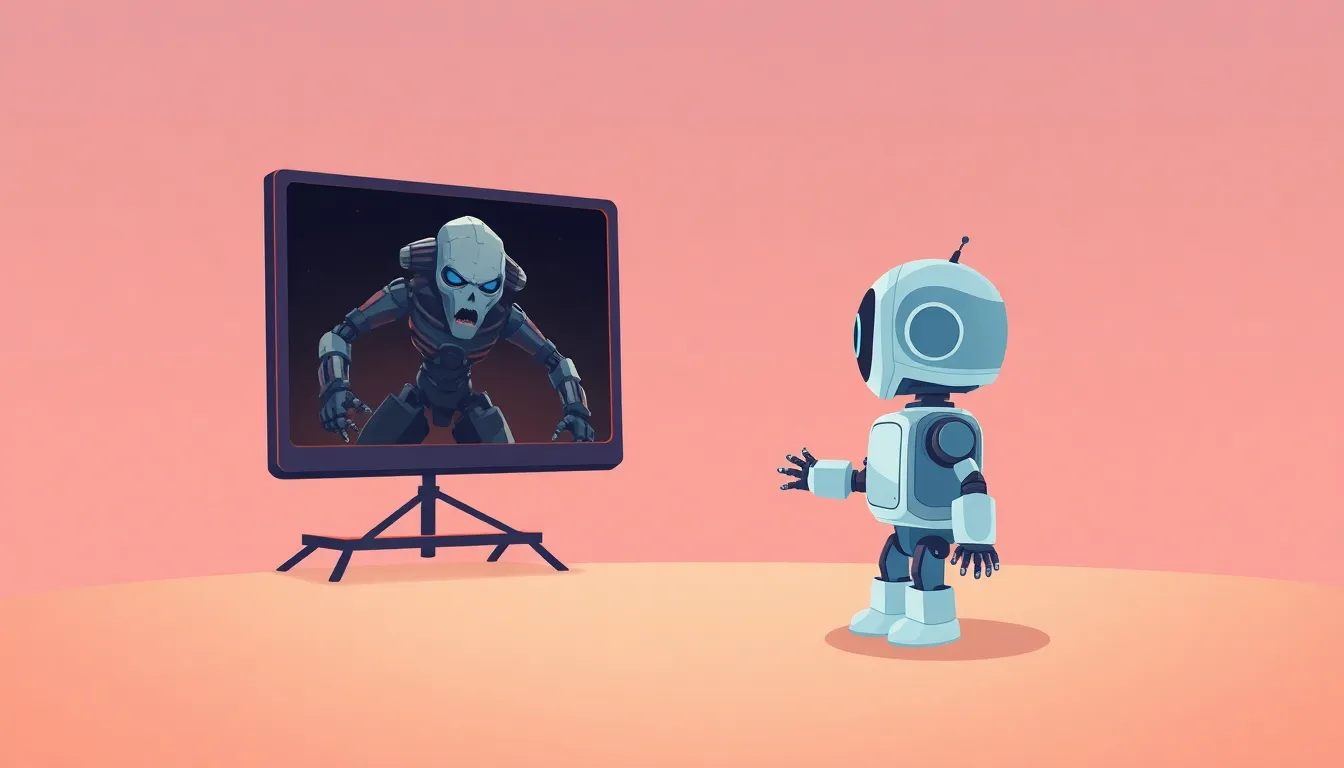
Terminator. Ex Machina. 2001: A Space Odyssey. Movies have taught us one thing: AI will become conscious, decide humans are the problem, and wipe us out.
Great movie plot. Terrible reality check.
Is AI dangerous? Yes, but not the way you think. The real dangers are a lot more boring than Skynet — and that’s exactly why we should deal with them.
The myth of conscious AI
Current AI isn’t conscious. Not close. Not on its way. ChatGPT doesn’t know it exists. It has no goals, no desires, no plan for world domination. It predicts the next word in a sentence. That’s it.
Serious researchers — and there are many — agree on this. We’re very, very far from artificial general intelligence that could have intentions. We don’t even know if it’s possible with current technology.
That doesn’t mean it’ll never happen. But it means it’s not today’s danger.
The real dangers (the boring ones)
Disinformation. AI can generate fake news articles, fake images, fake videos at unprecedented speed and quality. It’s already a problem. During elections, deepfakes are everywhere. And it’s only going to get worse.
Bias. AI learns from human data. And human data is full of prejudice. An AI system used to filter resumes can discriminate against women. A predictive policing system can target poor neighborhoods. Not because AI is racist — because the data is.
Dependency. The more we let AI make decisions, the more we lose our ability to make them ourselves. It’s the same phenomenon as GPS: since we started using it, our sense of direction has declined. Now imagine that, but for critical thinking.
Power concentration. AI is expensive to develop. Only the world’s largest companies can train the most powerful models. That puts immense power in the hands of a few corporations. It’s a democratic problem.
The good news
All these dangers are manageable. They require education, regulation, and vigilance. Not panic.
Disinformation is fought with critical thinking and verification tools. Bias is corrected with better data and regular audits. Dependency is prevented by keeping humans in the loop. Power concentration is fought with open source and regulation.
The worst thing we can do is be so afraid of AI that we ignore it. Or so trusting that we check nothing.
What you can do
Understand AI. Not in technical detail — just enough to know what it does well, what it does poorly, and where the risks are. It’s like learning the rules of the road: you don’t become a mechanic, but you drive safely.
That’s why we created Sherpa. So everyone can understand AI without panic and without BS. And so the real dangers — not the movie ones — are handled by informed citizens, not ignored by people who are scared.