Your Brain Is a Neural Network. So Is ChatGPT.
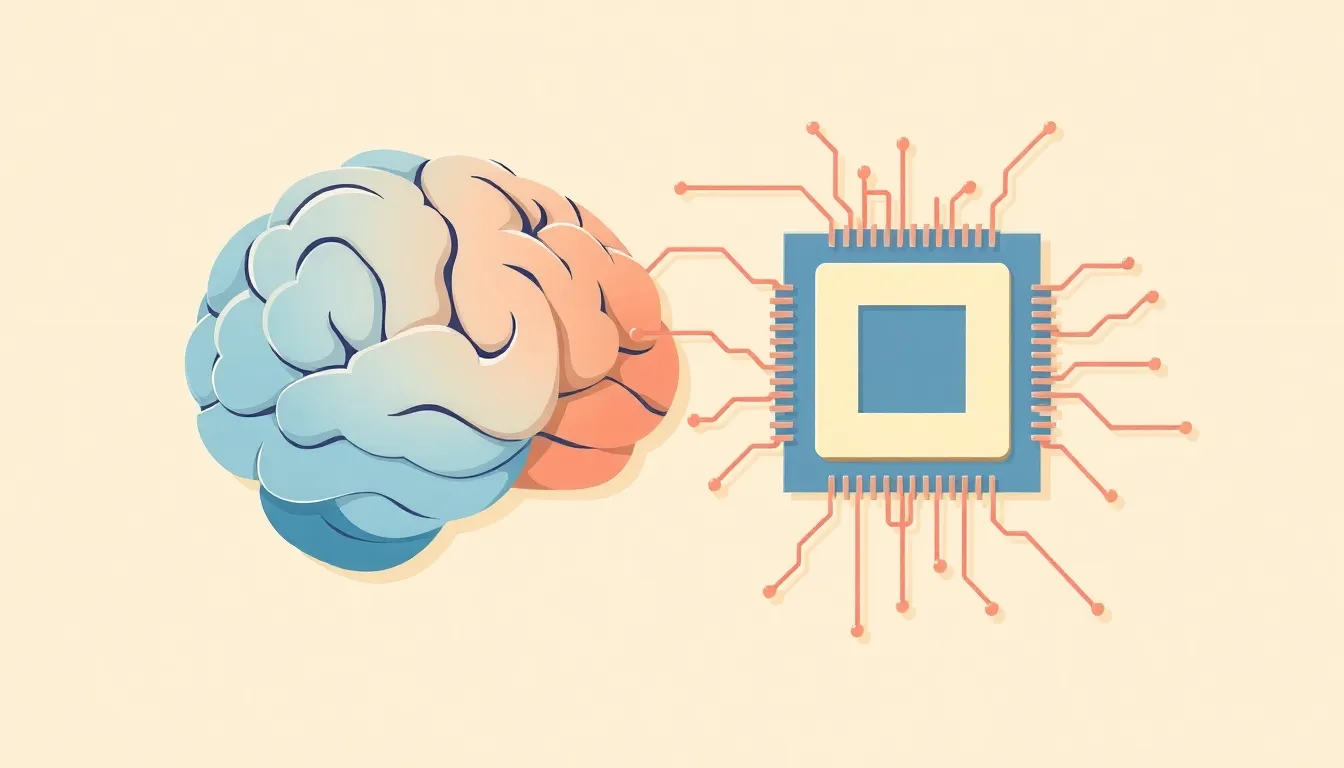
When scientists invented artificial neural networks in the 1950s, they were inspired by the human brain. Not to copy it — to steal a good idea.
Your brain contains roughly 86 billion neurons. Each neuron is connected to thousands of others. When you recognize your mother’s face in a crowd, it’s not a single neuron doing the work. It’s a network of neurons firing together.
AI works on the same principle. Except its neurons are lines of code and its connections are numbers.
How it works in your head
Imagine you’re learning to recognize a dog. The first time you see a dog, your brain activates certain neurons. The second time, the same neurons fire a bit stronger. After 100 dogs, the connections between those neurons are so reinforced that you recognize a dog instantly — even one you’ve never seen before.
That’s called learning through connection reinforcement. The more a connection is used, the stronger it gets. It’s like a trail in the woods: the more you walk it, the easier it is to follow.
How it works in ChatGPT
An artificial neural network does exactly the same thing. It has “neurons” (small math calculations) connected by “weights” (numbers). When you show it data, it adjusts its weights to better recognize patterns.
ChatGPT has around 175 billion parameters. Each parameter is a connection weight. It’s like 175 billion trails in the woods, each with a different width.
When you type “What is the capital of Canada?”, the information passes through those billions of connections, each neuron contributes a small piece, and at the end of the path, the word “Ottawa” comes out with the highest probability.
The differences (they’re huge)
Your brain and ChatGPT share a basic principle, but the differences are enormous.
Your brain uses about 20 watts of energy. Like a small light bulb. ChatGPT uses thousands to answer your questions. Your brain is incredibly efficient.
Your brain learns continuously. Every experience changes it a little. ChatGPT is frozen after training — it doesn’t learn from your conversation (unless it’s retrained). It’s like the difference between a musician who improvises and a jukebox playing recorded songs.
And most importantly: your brain is connected to a body. It knows what cold feels like, what hunger is, what fatigue is. ChatGPT has never been cold in its life. This embodied experience fundamentally changes how you understand the world.
Why this is useful to know
Understanding that AI is inspired by the brain — without being a brain — helps you use it better. You know why it’s good at pattern recognition. You know why it’s bad at common sense. You know it doesn’t “learn” from you in real time.
It’s like understanding your car’s engine. You don’t become a mechanic, but you know when something sounds off.
At Laeka Research, we study these parallels between human and artificial cognition. And with Sherpa, we give you the tools to interact with AI while understanding how it works — not just hoping it does.