Does ChatGPT Actually Understand What You’re Saying?
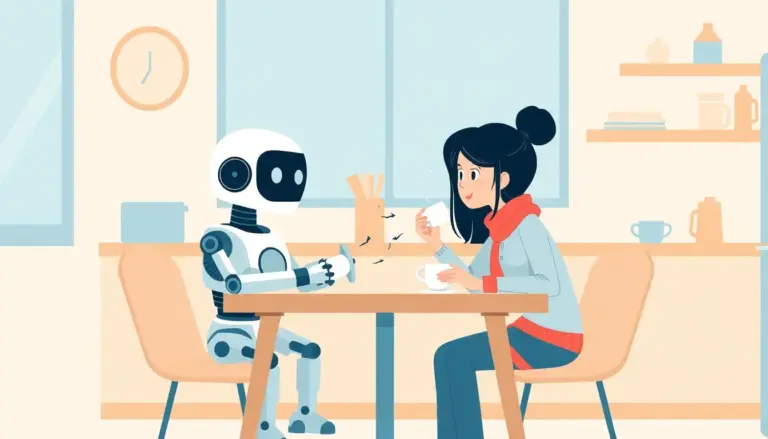
You’re chatting with ChatGPT and it answers like it understands. It cracks jokes. It asks follow-up questions. It says “I see your point.” It’s unsettling. It feels like there’s someone on the other end.
But does it actually understand what you’re saying?
The short answer: no. But the long answer is way more interesting.
The world’s most sophisticated parrot
Imagine a parrot that has listened to every conversation in human history. Every book, every email, every Reddit thread, every newspaper article. That parrot would know exactly what to say after any sentence. It would look like it understands. But it would just be repeating patterns it’s heard millions of times.
ChatGPT is that parrot. Way more sophisticated, but the principle is the same. It predicts the next word. Then the next one. It has no “understanding” the way you and I understand things.
When you tell it “I have a headache,” it’ll respond with something appropriate. Not because it knows what a headache feels like. But because it’s seen millions of conversations where someone says that, and it knows statistically what response comes next.
Understanding vs simulating understanding
Here’s the thing that confuses everyone: the simulation of understanding can be genuinely useful even if it’s not real understanding.
When ChatGPT summarizes a 50-page document into 3 paragraphs, the result is often excellent. Did it “understand” the document? No. It identified the important patterns in the text and reformulated them. But for you, the result is the same: you’ve got a solid summary.
It’s like a calculator. A calculator doesn’t “understand” math. But it gives the right answers. You use it anyway.
The danger is when we forget it’s a simulation. When we trust blindly. When we assume that if the answer looks smart, it must be true. That’s where people get burned.
When it falls apart
ChatGPT is excellent when the situation looks like something it’s already seen. Writing a professional email? It’s seen millions of emails. Explaining photosynthesis? It’s read every biology textbook.
But ask it a truly original question — something nobody has ever written about online — and it’ll still answer with confidence. Except the answer will be made up. That’s what we call a hallucination. The model generates probable-sounding text, even when it has no basis for doing so.
It’s exactly like the parrot. If you ask it a question in a language it’s never heard, it’ll still respond with the sounds it knows. It’ll sound like language. But it’ll be gibberish.
How to use it well
The key is to treat ChatGPT like a brilliant assistant who’s not 100% reliable. Use it to brainstorm, draft first versions, summarize, rephrase. But verify the important facts. Review what it writes with your own judgment.
Think of it like a super competent intern who started a week ago. Fast and productive, but you review their work before sending it to the client.
If you want to explore AI in a guided, safe way, try Sherpa — our free AI guide, that helps you understand when to trust AI and when to step back. Because understanding a tool’s limits is the first step to using it well.